[Invited Colloquium] Fine-Scale Climate Projections Reveal Spatial Heterogeneity in Future Aedes Suitability Across Southeast Asia
[Lecture Information]
- Date & Time: September 21, 2026, 4:00–5:00 PM
- Venue: Room 113, Building 82, Graduate School of Environmental Studies, Seoul National University
- Hosted by: City Energy Lab & BK21 Four Program, Graduate School of Environmental Studies, Seoul National University
- Moderator: Prof. Quan Jige (Graduate School of Environmental Studies, Seoul National University)
[Highlight]
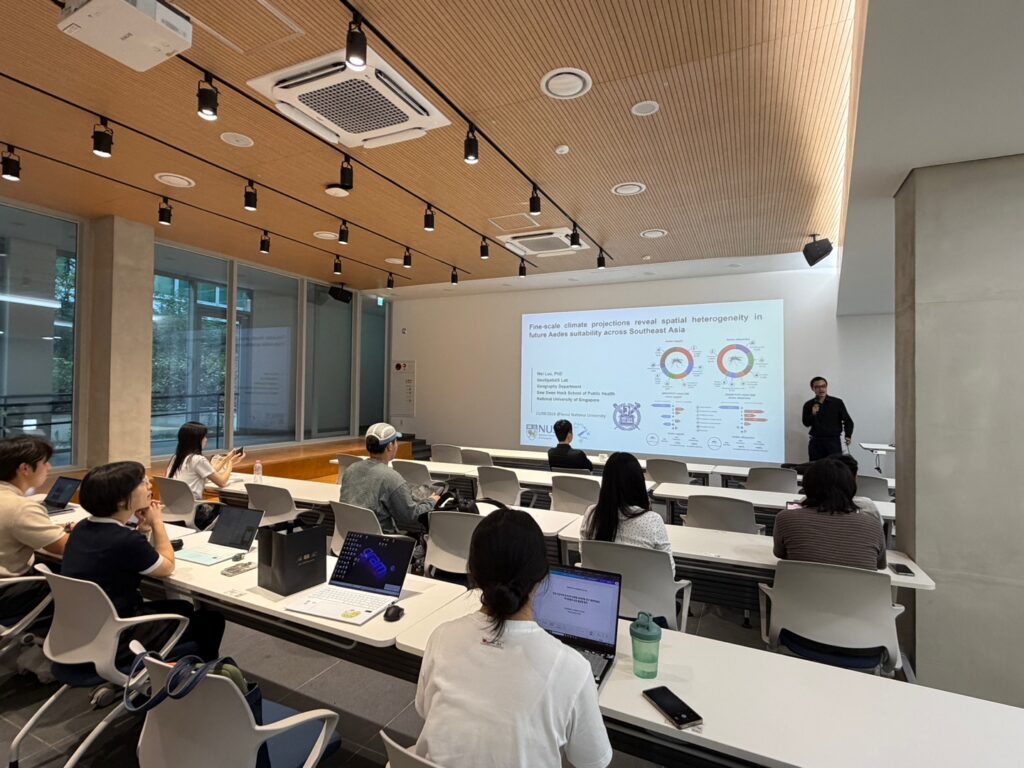
The presentation explored the future habitat suitability of key mosquito vectors, specifically Aedes aegypti and Aedes albopictus, across Southeast Asian regions by leveraging high-resolution climate projections and detailed spatial datasets. Associate Professor Luo highlighted that suitable habitats for both vector species are projected to expand significantly, increasing by more than 10% across the region by the year 2050. The talk emphasized that addressing vector-borne disease risks requires moving beyond macro-level climate models to examine local spatial variations and fine-scale environmental factors.
Through empirical analysis, Associate Professor Luo demonstrated the contrasting roles played by ongoing urbanization and broader climatic shifts in driving mosquito distribution patterns and associated arboviral transmission risks. He introduced how spatial analytics, geographic modeling, and high-resolution environmental data can uncover localized vulnerabilities, enabling policymakers and urban planners to design more targeted, context-sensitive public health interventions across diverse regional landscapes.
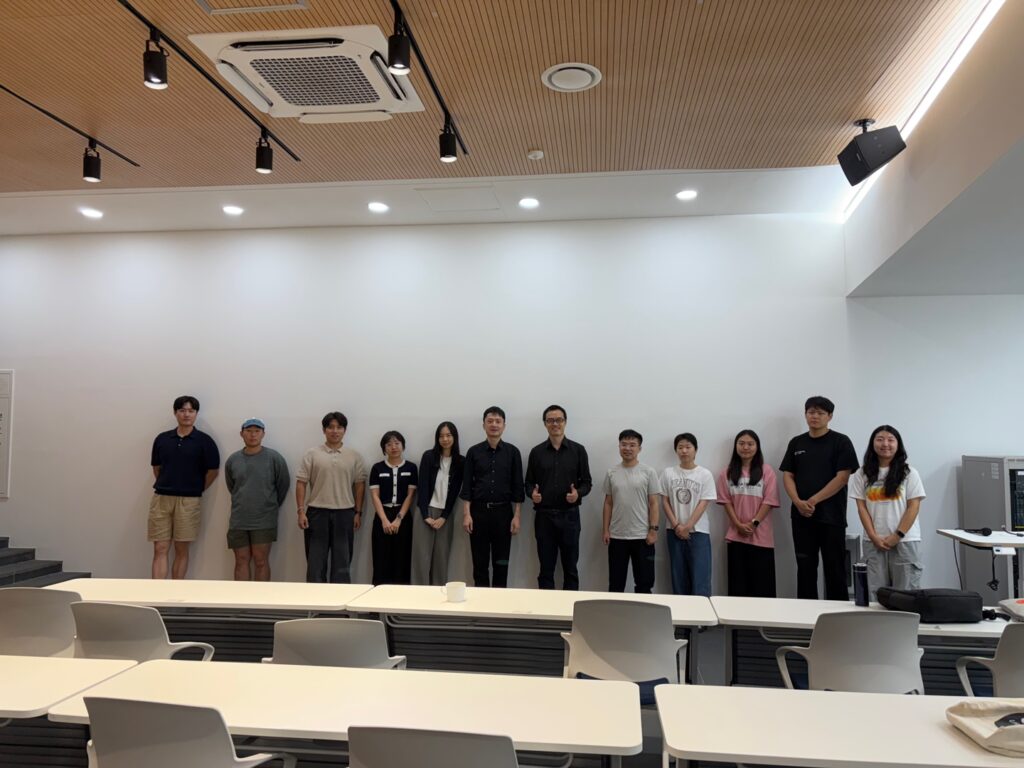
Moderated by Prof. Quan Jige, the colloquium provided an invaluable platform for academic exchange, bringing together students, faculty, and researchers in urban planning, spatial analytics, and environmental studies. The session concluded with a vibrant discussion on how spatial data science and interdisciplinary research can better inform sustainable urban planning, climate adaptation strategies, and regional health security.
0 Comments