Schedule
10:30am-10:40am
Introduction of the Workshop and the team (Steven)
10:40am-11:10am
Shape grammars and Shape Machine (Thanos)
11:10am – 12:30pm
Interactive Introduction to Shape Machine (Thanos and Kurt)
12:30pm – 1:30pm
Lunch
1:30pm – 2:00pm
Shape Machine and Shape Signature (James)
2:00pm – 2:30pm
Shape Machine and Interpreters (Kurt)
2:30pm – 3:00pm
Representation and Process in Smart Design (Steven)
3:00pm – 3:15pm Coffee break
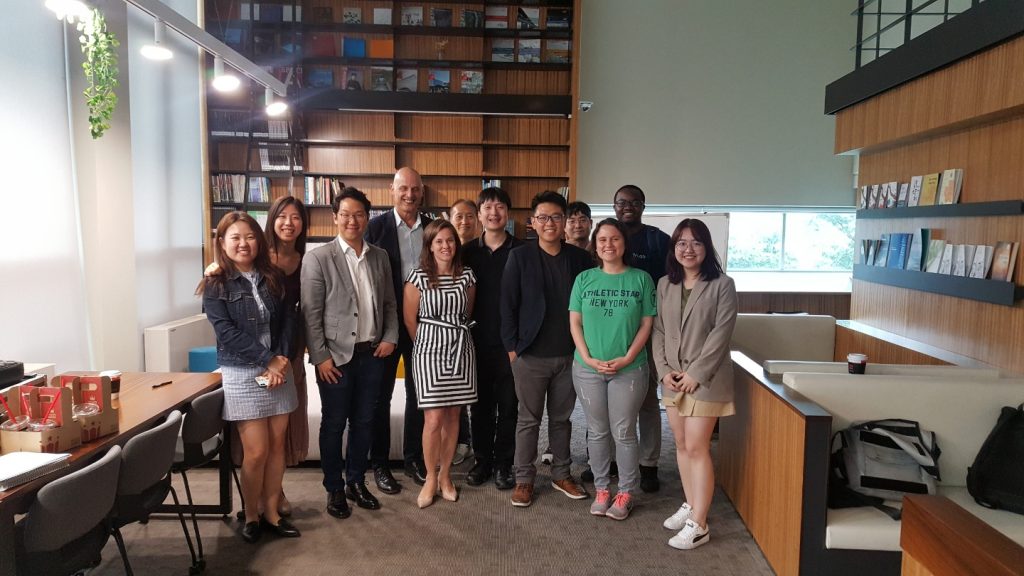
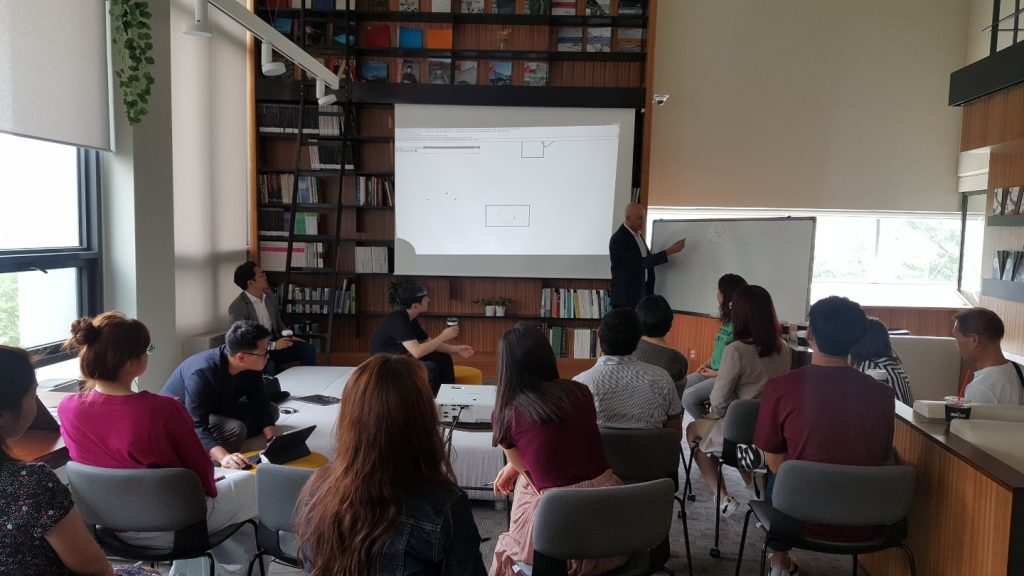
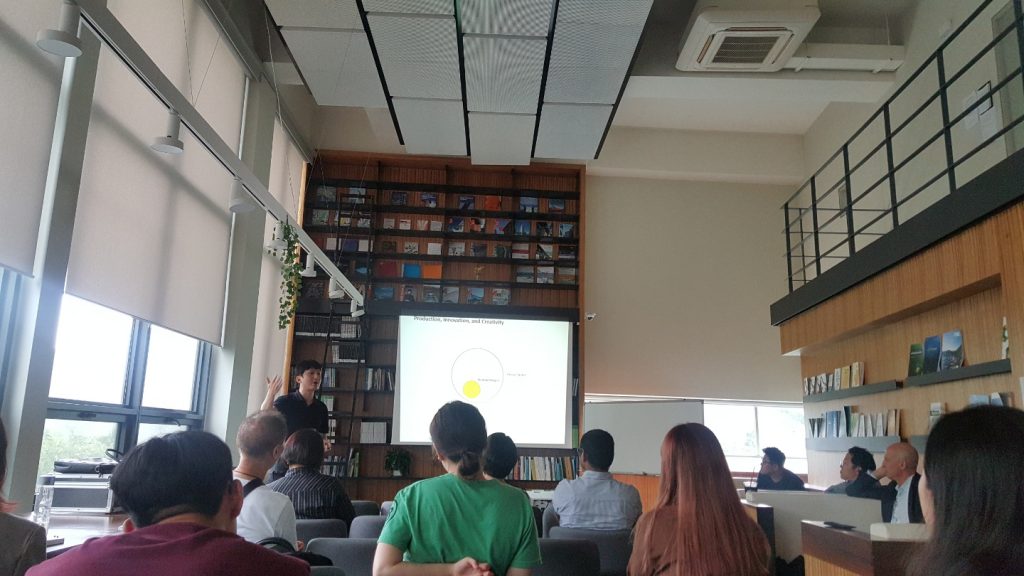
Abstracts
Shape grammars and Shape Machine
A brief sketch of the shape grammar formalism, one of the most powerful formal systems for the generative description of designs, is given. The talk discusses the foundations of the shape grammar formalism in terms of algebras of shapes, labeled shapes, weighted shapes and shape rules defined over these algebras and provides a useful overview of its applications in design research. The emphasis is given in current research work at Georgia Institute of Technology and in particular the Shape Machine, an in-house software currently in development in the Shape Computation Lab, that promises to become the par excellent tool for formal studies in visual analysis and design and design research at large.
Interactive introduction to Shape Machine
An interactive survey of the expressive power of Shape Machine, a new shape grammar interpreter, is presented. The work is presented in two parts: A brief presentation of a series of shape computations that have been routinely used as benchmarks for the design tasks a shape grammar interpreter should be able to accomplish; and a brief exploration of design applications in various domains, namely, product modeling, mechanical and architectural design to suggest possibilities for new design workflows and/or new trajectories in new domains too. Some speculations on the future of the technology pertaining to its potential usage in a new paradigm of programming with shapes (programming by drawing) and/or the envision of a new paradigm of a physical computer are presented in the end.
Shape Machine and Shape Signature
A brief outline of the mathematical representation of shapes in Shape Machine is discussed. The dual representation of shapes in terms of carrier lines and maximal lines is given in the form of a unique shape signature that is used in an enumeration to count all possible shapes up to four lines. The possible extensions of the shape signature formalism to provide a unique parametric signature of shapes in 2D and 3D parametric modeling software is given in the end.
Shape Machine and Interpreters
A brief sketch of shape grammar interpreters is given structured around the two key characteristics of the shape grammar formalism: recursion and fusion (embedding), and the ways both have been implemented in software applications. A special emphasis is given to general purpose interpreters and mostly, on the ways the embedding relation, the most uncanny and evancenscent quality of shape computation, has been implemented. The talk builds on current classifications of shape grammar interpreters in the literature but significantly extends them to include issues pertaining to shape types, domains of transformations, performance, computational precision and system sensitivity.
Shape Machine Workshop
An interactive hands-on discussion with the audience brainstorming on current and future design workflows in multiple disciplines including Architecture, Industrial Design, Graphic Design, Mechanical Engineering and Computer Science. The audience will be invited to propose current workflows in design practice that will be visually modelled on the spot to explore the expressive power of the Shape machine to quickly and seamlessly integrate such patterns and workflows in design inquiry.
Blurbs
Athanassios Economou, Dipl. Arch, M.Arch, PhD
Professor of Architecture
thanos@gatech.edu
Athanassios (Thanos) Economou is Professor in the College of Design at the Georgia Institute of Technology. Dr. Economou’s teaching and research are in the areas of shape grammars, computational design, computer-aided design and design theory, with over forty published papers in these areas. Recent funded projects include the Shape Machine sponsored by NSF/iCorps and the project Courtsweb: A Visual Database of Federal Courthouses, GSA/US.Courts, $1.3M. Design projects from his studios at Georgia Tech have received prestigious awards in international and national architectural competitions. He is the Director of the Shape Computation Lab at Georgia Tech and the Director of the Architetconics in Greece and Italy Study Abroad Program at Georgia Tech. He has been invited to give talks, seminars, and workshops at several universities including MIT, Harvard, TU Vienna, U. Michigan, Tsinghua U, UCLA, NTUA, U.Thessaly, U.Aegean, among others. Dr. Economou holds a Diploma in Architecture from NTUA, Athens, Greece, an M.Arch from USC, and a Ph.D. in Architecture from UCLA.
James Park, BS. Arch, M.Arch, C.Phil
Research Assistant
james.park@gatech.edu
James Park is a PhD Student in the School of Architecture at the Georgia Institute of Technology. His research investigates courthouses as a building type and focuses on designing and implementing a generative description of the building type in the form of a shape grammar. James is a research assistant at the Shape Computation Lab and his contributions include the administration of a funded research project, Courtsweb: A visual database of contemporary US courthouses, in collaboration with GSA and US Courts; generative and parametric modeling in formal design studies; and design and implementation of various database and web applications. He is an instructor for the series of courses on computational media and modeling at the School of Architecture and a teaching assistant for the Georgia Tech Architectonics in Greece and Italy Study Abroad Program. James holds a BSArch and MArch from the Georgia Institute of Technology.
Tzu-Chieh Kurt Hong, BE, ME, MArch, MSArch, C.Phil
Research Assistant
khong@gatech.edu
Tzu-Chieh Kurt Hong is a PhD candidate in the School of Architecture at the Georgia Institute of Technology. The current research of Kurt is mainly focusing on implementation of shape computation system, including the development of geometry/graph kernel, novel data representations and shape recognition algorithms. Kurt is a research assistant at the Shape Computation Lab working with Dr. Thanos Economou and his works include the implementation of shape grammar interpreter, generative modeling system of US Courthouse design and generative modeling system of Froebel blocks. Before entering Shape Computation Lab, Kurt was a research assistant at the Digital Building Lab working with Dr. Dennis Shelden, and his main contribution to Digital Building Lab included the implementation of Automatic Routing System in architecture and an interactive web-based data visualization platform, Smart 3D Atlanta. Kurt holds an BSEE, MSEE, MArch from the National Chiao Tung University (Taiwan), and an MSArch from the University of Michigan.
0 Comments